
Radiative Cooling

Overview
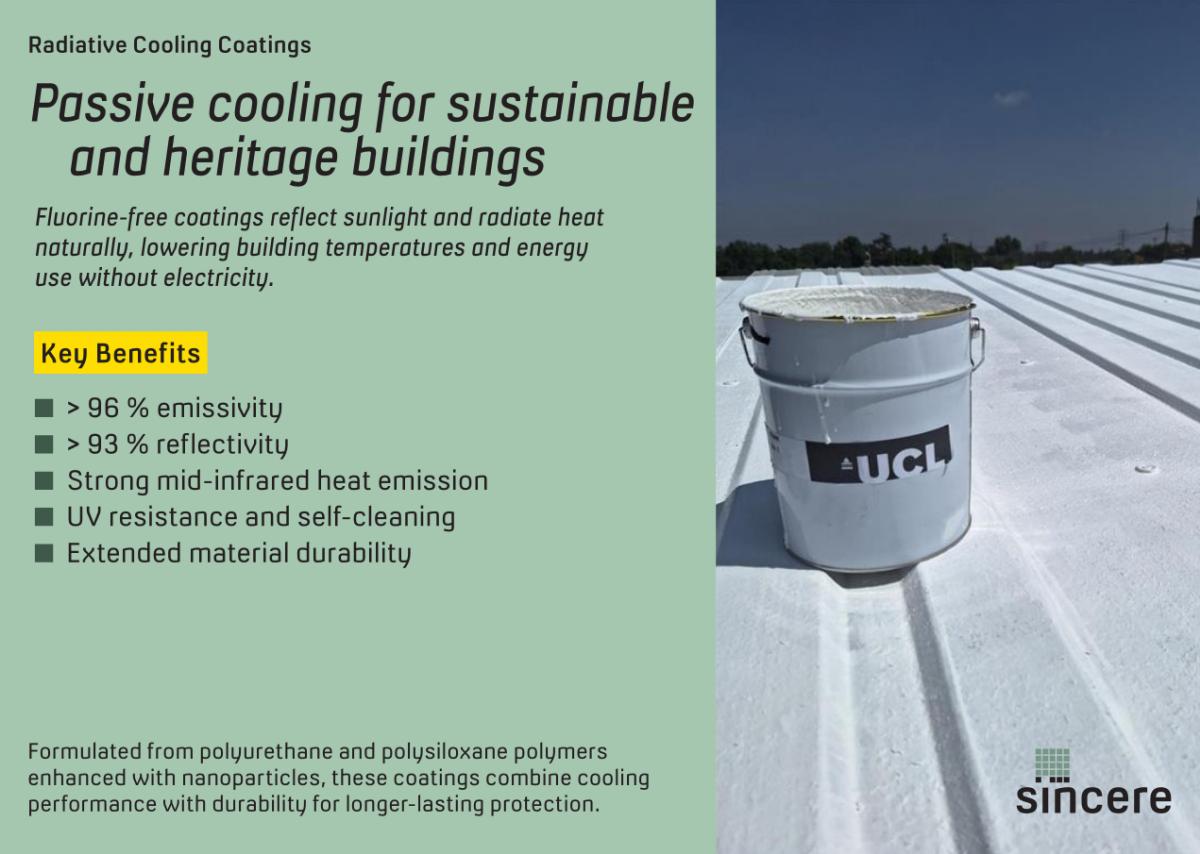
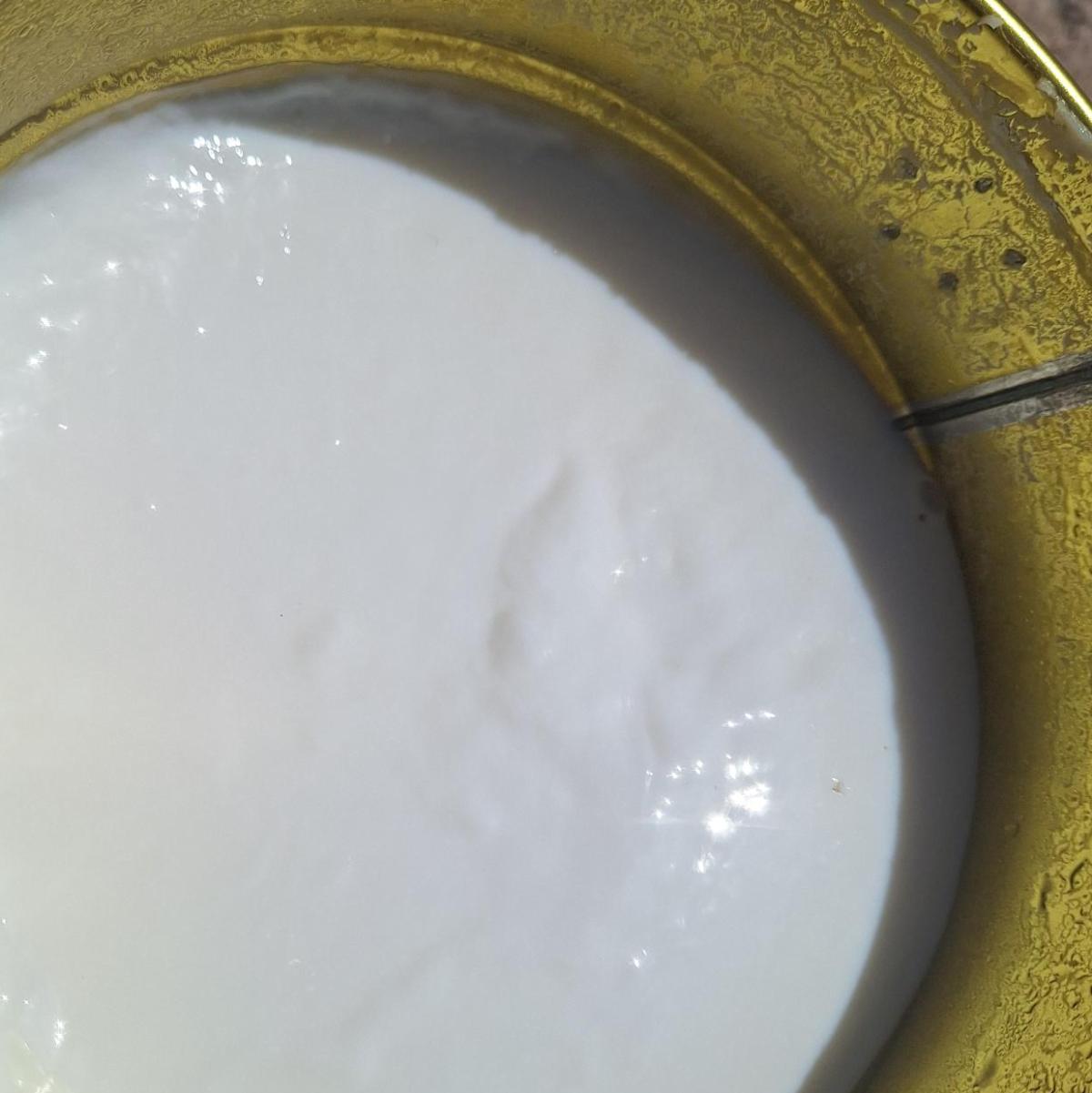
Radiative cooling paint is a material that reflects solar reflectance across the UV-VIS-NIR range (0.25-2.5 µm) while emitting heat through the mid-infrared sky window (8-13 µm), allowing surfaces to cool below ambient temperature. The bilayer system combines a primer of titanium dioxide/ calcium carbonate composite particles, which provides 92.7% solar reflectance across the UV-VIS-NIR range (0.25-2.5 µm), with a porous silica aerogel topcoat that increases light scattering and opacity. This coating also achieves thermal emissivity around 96.3%, surpassing commercial white paints. Field tests showed the coating reduced surface temperatures by up to 21°C vs. uncoated panels and about 10°C vs. standard white paint, proving its potential to lower cooling energy demand and mitigate urban heat.
Main applications
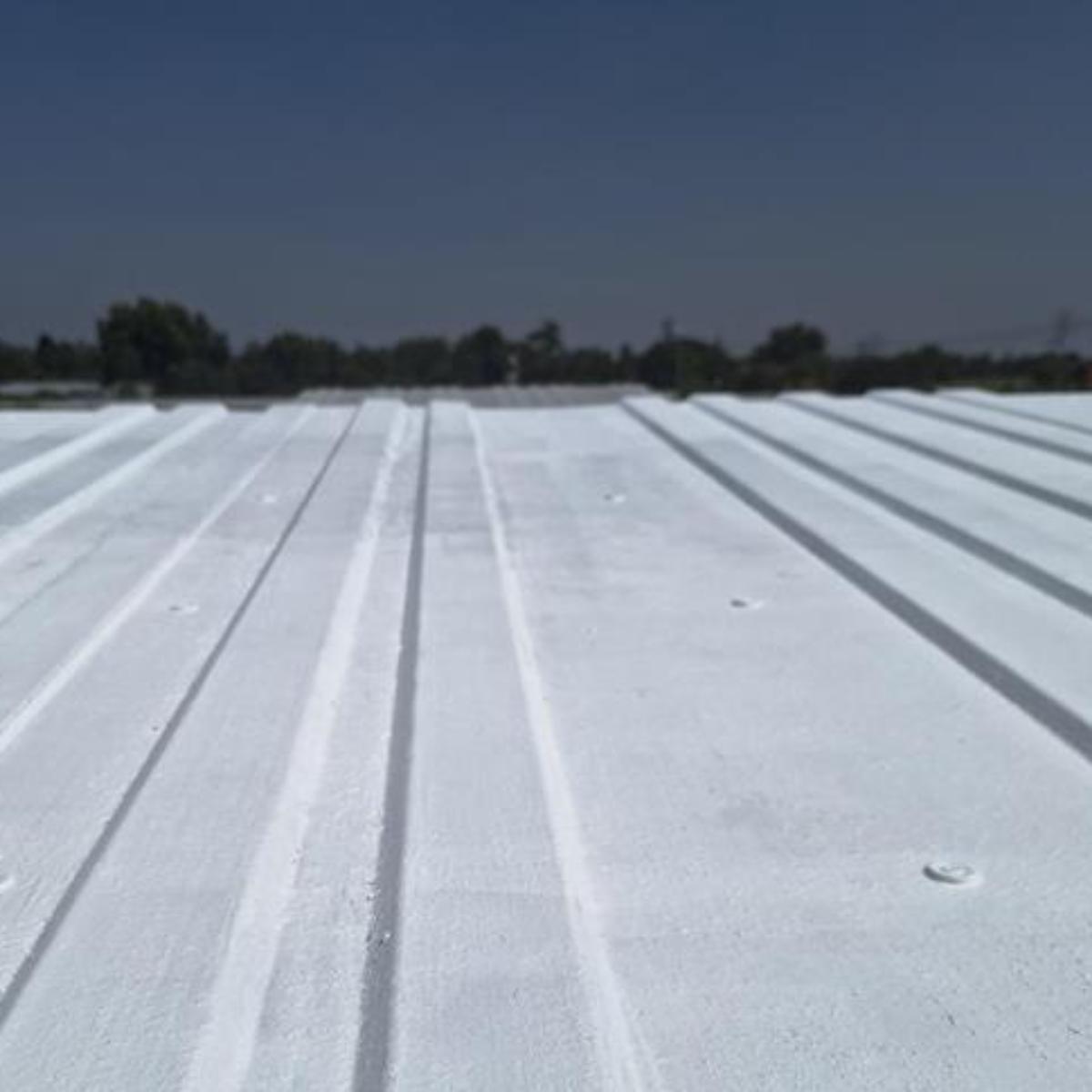
The radiative cooling paint is suitable for cultural heritage buildings where non-invasive, reversible solutions are required. It preserves architectural appearance, reduces indoor heat without HVAC systems, and lowers surface temperatures by up to 10 °C, making it ideal for heritage sites in hot climates aiming for energy efficiency and net-zero carbon goals.
Performance
Main key performance metric: up to 10 °C reduction of the roof temperature as compared to the commercial white paint
Additional qualities:
- High solar reflectance
- High thermal emissivity
- High scrub resistance
- Water-based, PFAS- free, APEO- free, and formaldehyde-free
- All day Passive cooling
Excellent adhesion to multiple substrates (plastic, metals, and masonry)
Long term cooling performance
Experimentation - SINCERE Pilots
The radiative cooling is being tested in the two pilots where the effect of the paint is most important, in high temperatures, in Holon and Madrid.
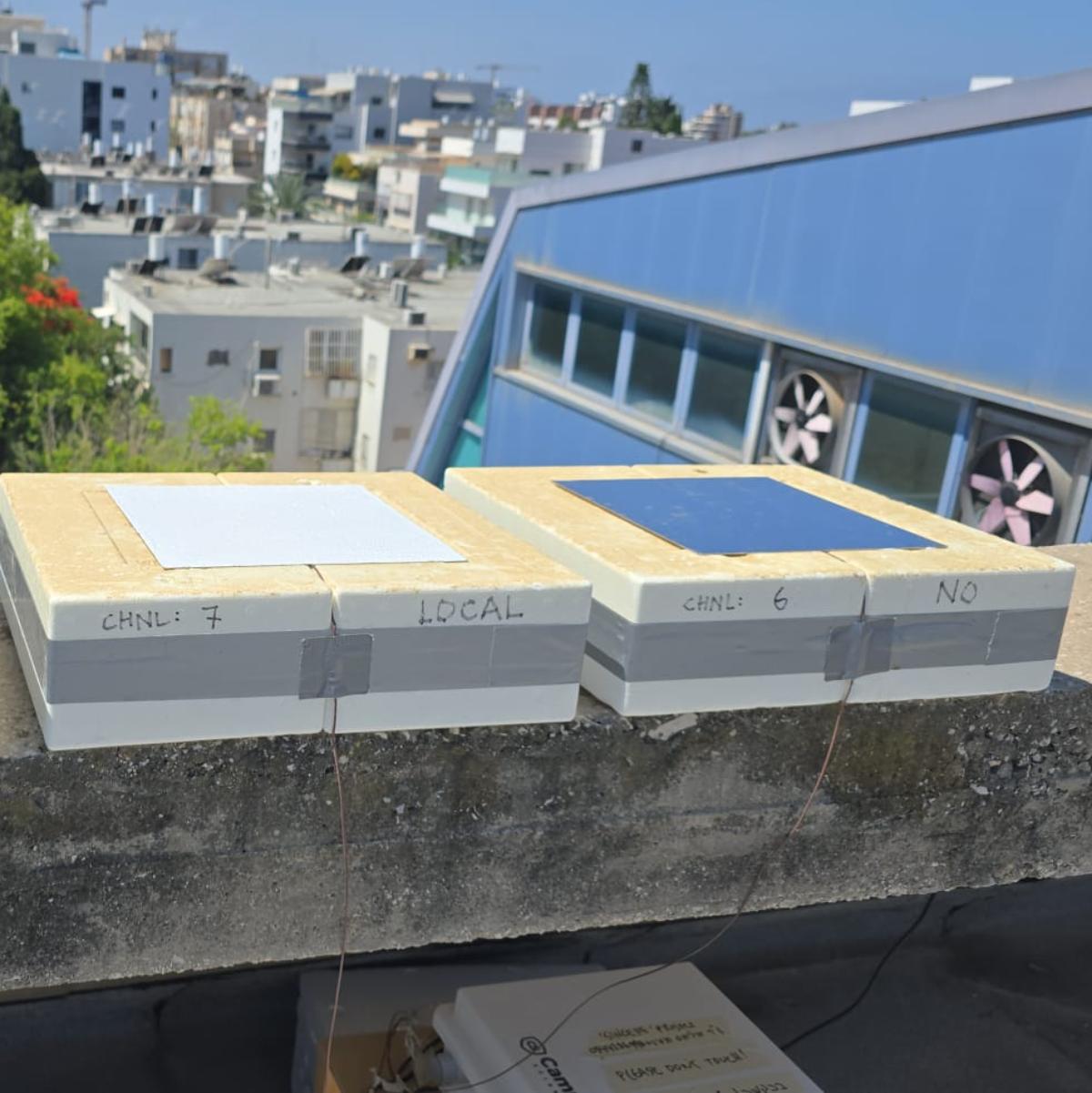
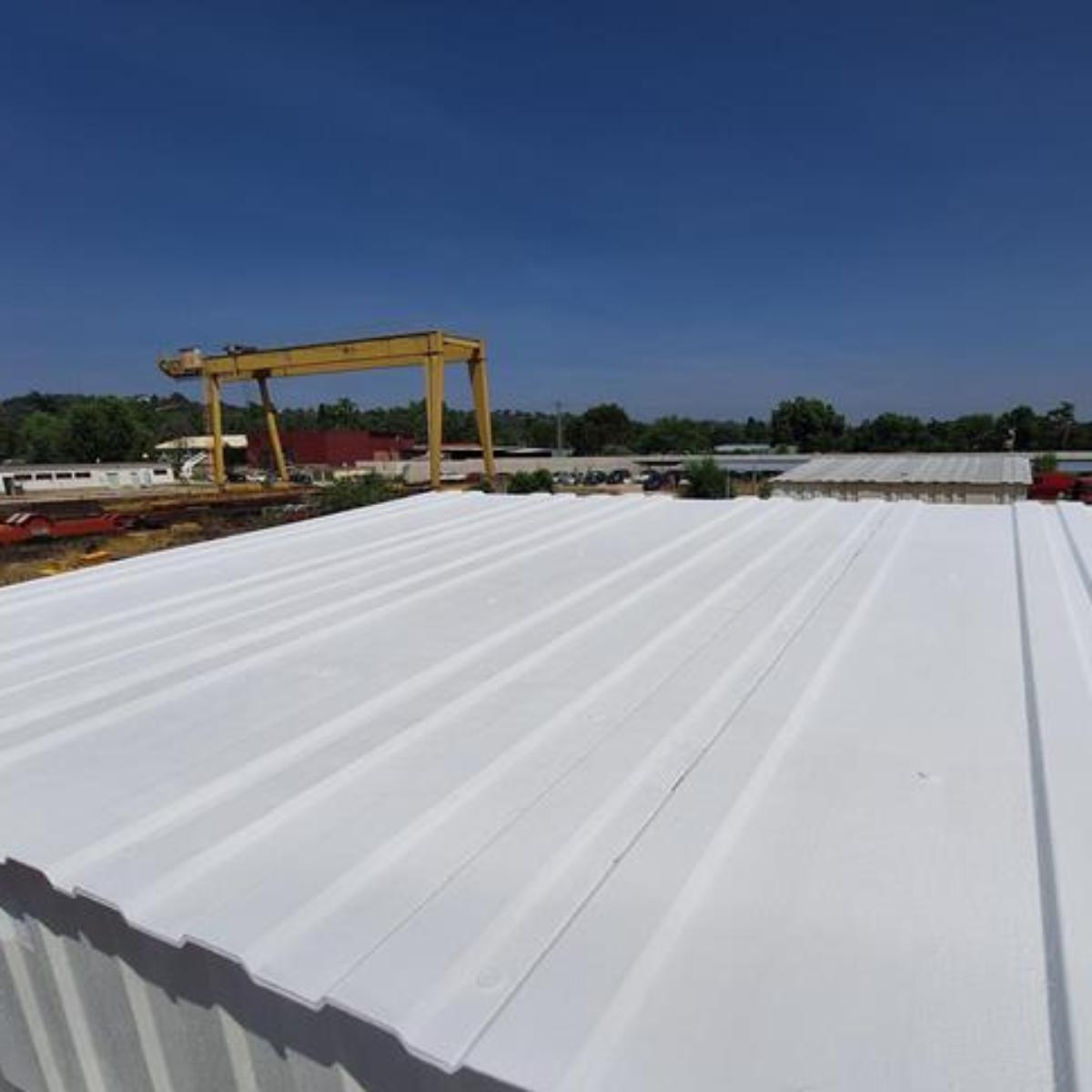
Currently, August 2026, the experiments in progress but we can already report that in the closed experiment in Madrid, there has been measured a cooling of around 8oC.
Selected Publications
Below you can find the preprint an important publication (under review) on the radiative cooling paints.
I. Papakonstantinou et al. Nanoparticulate selective emitters for effective radiative cooling in urban heat islands, Nature Portfolio, 2026. (preprint)
Metropolitan areas are often significantly warmer than their surroundings due to heat generated in cities and the use of heat-absorbing surfaces. This is known as the urban heat island effect and poses challenges to urban liveability and energy consumption. Passive radiative cooling via thermal emission to the cold universe within the 8–13 µm atmospheric transparency window offers a promising strategy, with spectral-targeted selective emitters theoretically outperforming broadband alternatives in achieving subambient cooling. Previous studies reporting only marginal gains from selective emitters, together with stringent material constraints, have favored broadband designs. We find this conclusion holds under unobstructed-sky conditions, such as in rural areas, whereas in dense urban landscapes, the benefit of selective emitters becomes appreciable. Experiments mimicking urban rooftops surrounded by taller buildings heated to 40–80°C under heatwave conditions show selective emitters achieve surface temperatures up to ~ 5°C lower than broadband with limited sky view factor. City-scale modelling further confirms that rooftop-deployed selective emitters can deliver enhanced cooling performance under urban radiative heat cross-talk. Furthermore, we overcome the material limitations of conventional selective emitters by developing nanoparticulate systems (Nano-SEs) that combine superior infrared spectral selectivity with tunable solar responses for diverse applications. Our work paves the way for a potentially scalable pathway toward radiative cooling technologies capable of substantially mitigating urban heat islands and improving thermal resilience in future cities.
Exhibitions
The radiative cooling paint innovation was featured at the SINCERE's booth at ECOMONDO, together with other exploirable results by the SINCERE project.
